
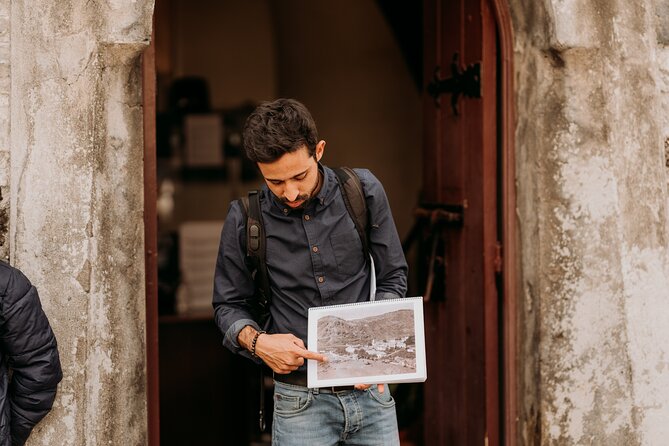
Reviewed · CITY TOURS
Ribeira Brava: The barn of the first atlantic city – Private Tour
Madeira’s past shows up close. This Ribeira Brava tour reads the island from Earth formation to town street details, using geology you can point at and culture you can walk through. I love how the guide turns the valley into a science lesson, and I love the way the story ties Portuguese settlement and local industry to what you see today.
One thing to plan for: it runs only in good weather, and private transportation is not included, so you’ll want to get yourself to the Fort of São Bento start point.
Key highlights at a glance
- Geology taught on the ground: you’ll see Quaternary alluvial deposits and subaerial lava flows in situ.
- Flash-flood history matters here: the tour explains how Madeira’s sudden floods shaped the valley and settlement.
- Architecture with engineering clues: you’ll observe features tied to Captain Luis Gonçalves Silva’s manor house.
- Sugar cane mills and money: you connect crops to Madeira’s socio-economic evolution, not just scenery.
- Street stonework gets decoded: Portuguese-pavement style and Madeiran-pavement style, compared and explained.
Ribeira Brava as Madeira’s classroom, not just another town walk
If you’ve been to Madeira and found yourself saying, I see the views, but I want the why, this kind of tour clicks fast. Ribeira Brava is smaller than the headline cities, and that’s the advantage. You can watch the island’s story unfold within the historical center, because geology and human planning are right there in the same streets and buildings.
This “barn of the first Atlantic city” concept is really a framing device. Instead of a museum lecture, you get a guided walk that treats the town like a living textbook. The result is that you start noticing details you’d normally step past: how the valley was used, how builders responded to natural forces, and how Portuguese influence shows up in stone and structure.
And it’s not only dry science. The tour connects Earth formation, hazards like flash floods, and the Portuguese settlement story, then links that to later economic life. Sugar cane mills come into play for a reason: crops were not just crops, they were the engines that pulled people and wealth into place.
Wider loops of the city, if this one is too short
Fort of São Bento meeting point, and what the 2.5 hours really feels like
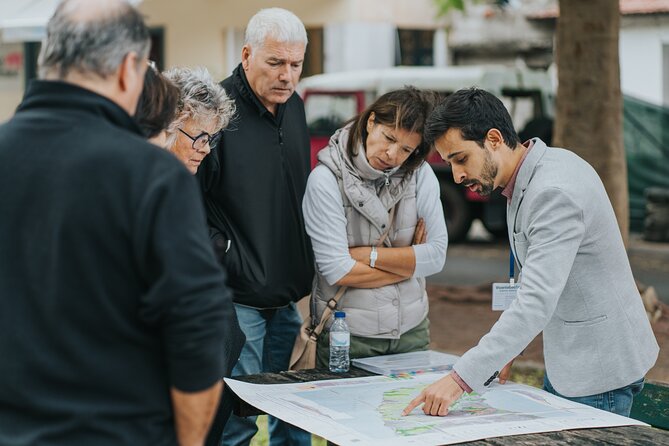
The tour starts at Fort of São Bento (R. Gago Coutinho e Sacadura Cabral, 9350-216 Ribeira Brava) and ends back at the same meeting point. That simple loop matters. You don’t lose time figuring out logistics mid-tour. You also get a clear beginning and end, which makes it easier to fit into a morning schedule or your first full day on the island.
The duration is about 2 hours 30 minutes, give or take. That’s long enough to cover geology, architecture, economy, and street design without rushing every single stop. It’s also short enough that you can keep your energy for the rest of your day afterward.
Private tour means only your group participates. That tends to make questions easier. If you’re curious about why a certain wall or street layout looks the way it does, this format gives you more room to ask.
Island formation and the Madeira archipelago story, explained with real examples
The tour begins with a big-picture setup: Earth’s formation and then the particularities of the Madeira archipelago. That’s important context, because Madeira’s identity is tied to volcanic processes and later changes shaped by water.
Then the walk becomes practical. You observe Quaternary alluvial deposits and subaerial lava flows directly in the place where they matter. Seeing that in situ changes how you understand the terrain. All those hills and valleys stop being random and start being readable. You get a sense of what was laid down, what moved, and what later humans had to work with.
If you like science but hate lectures, this is the right style. The geology is not just named. It’s pointed at. It’s connected to how the town sits where it sits.
Flash floods in Madeira, and how they shape where people build
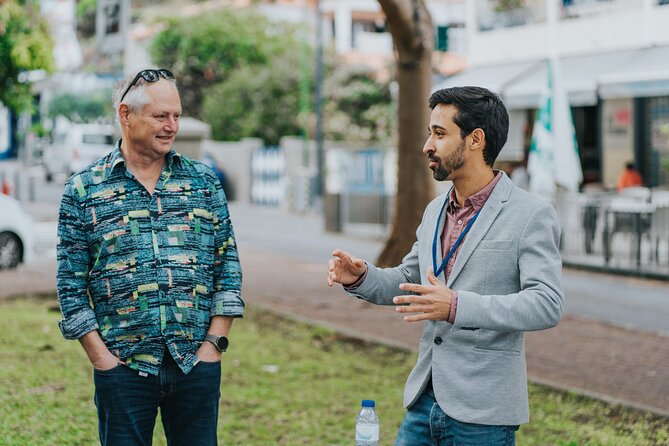
One of the most useful parts of this tour is the section on flash floods. Madeira’s weather can turn quickly, and sudden water events are not just a safety note. They shape valleys over time.
Here’s what I think makes this topic valuable: it’s the bridge between natural process and daily life. When you understand that flash flooding has happened, you stop treating the town layout as an aesthetic choice. You start looking for clues in space planning and where settlement makes sense.
The guide interprets the spatial planning of Ribeira Brava in a way that helps you follow the logic. You learn how people likely adapted to risk and movement of water, and how the historical center grew around those realities.
Even if you don’t remember the exact geological terminology later, you’ll remember the mindset: the island’s forces helped write the town plan.
Portuguese settlement, heritage stone, and Captain Luis Gonçalves Silva’s manor
After the physical story, the tour shifts to the human one. It synthesizes Madeira’s settlement, then brings you into specific built heritage.
You’ll observe engineering particulars of the manor house of Captain Luis Gonçalves Silva. The key point is not that you become an architecture expert in one walk. It’s that you can see how design choices respond to place. When the guide points out those engineering elements, you start connecting the house to the slopes, the stone availability, and the needs of the era.
Next comes a neat detail that makes the geology feel official. You’ll observe one of Portugal’s Global Heritage Stones. That sounds like a label, but the impact is that you start thinking of rock like a historical document. It’s not only what the island looks like. It’s what the island records.
If you enjoy heritage that is tied to physical reality, this is a great section. It takes you beyond plaques and into interpretation.
A few more Madeira trips people book alongside this one
- Madeira: Private Funchal City Tour in a Tukxi★ 4.7 · 684 reviews
- Madeira “Mystery Tour” – Full Day Private 4×4 Jeep★ 5.0 · 199 reviews
- Madeira: Private Cristiano Ronaldo Tour with CR7 Museum★ 4.9 · 176 reviews
- Madeira Private Bespoke Exclusive Grand Tour | Premium Quality★ 5.0 · 130 reviews
- Madeira: Private Guided Cabo Girão Tour★ 4.9 · 113 reviews
Sugar cane mills and Madeira’s socio-economic evolution
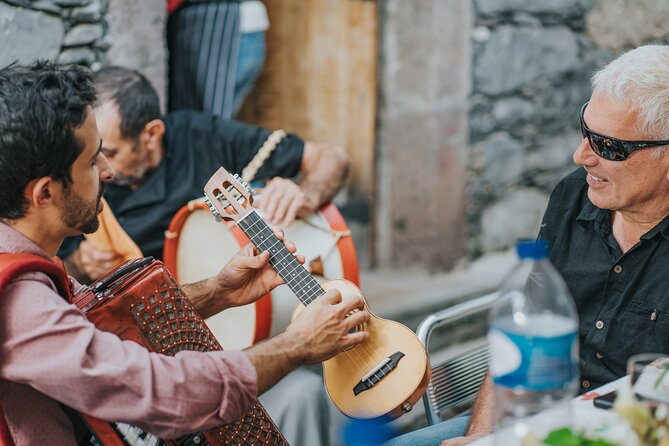
Madeira’s story is often told with views and levadas. This tour adds something else: economics, labor, and how resources drove growth.
You’ll observe sugar cane mills and how they relate to Madeira’s socio-economic evolution. Even without a long lecture, that topic lands because it explains why certain periods mattered. Sugar was not a small footnote. It shaped who had power, what was built, and how communities developed.
What I like about this approach is that it connects the dots between landscape, industry, and settlement. You’ve already been looking at geology and water. Now you understand why a crop like sugar cane could matter enough to leave physical traces in buildings and infrastructure.
That makes the walk feel less like a checklist and more like one long chain of causes and effects.
Portuguese paving, Madeiran paving, and the small clues under your feet
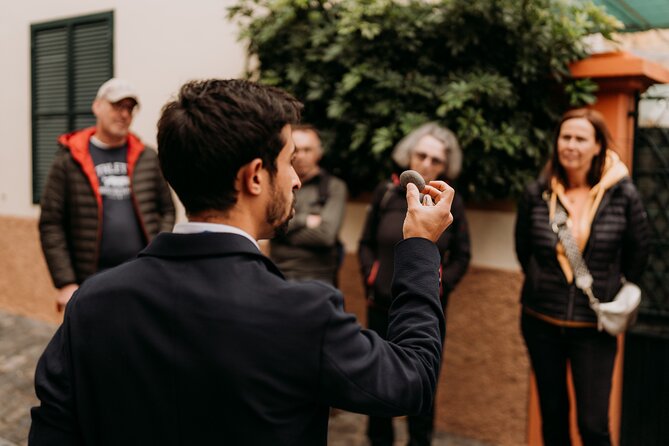
At some point in every Madeira trip, you start watching the ground because you can’t help it. Stonework is everywhere. This tour turns that into an actual learning moment.
You observe the Portuguese-pavement style and the Madeiran-pavement style applied. The guide explains what you’re seeing, so it stops being only pretty patterns and becomes functional design.
This section is also a good break from heavier science. You get a different kind of detail. You can slow down and look at how stones are arranged, how styles differ, and how local choices reflect Portuguese influence.
It’s one of those tours where you’ll walk away seeing the town more clearly. Not just taller mountains in the distance, but the texture of daily life.
Guides: Sandro and Santosh, and why their teaching style matters
The guides are a big part of why this tour earns top marks. Names show up repeatedly, including Sandro and Santosh. Both are described as very prepared, friendly, and able to explain complex topics in a clear way.
That matters because geology and historical engineering can get technical fast. If the guide can keep it understandable, you actually retain the information. The best version of this tour is not the one with the longest vocabulary. It’s the one where you can ask a question and get a straight, patient answer.
I also like that this kind of tour invites curiosity. The explanations are structured, but you’re not stuck in a rigid script. If something in the street catches your eye, you can usually tie it back to the tour themes.
Price and value: does $40.33 make sense for 2.5 hours?
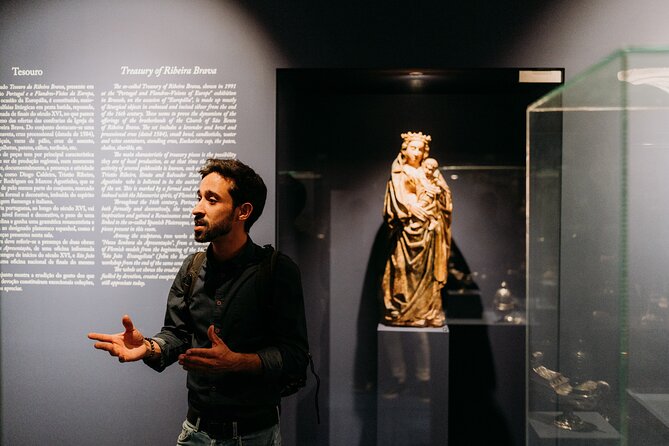
At $40.33 per person, this isn’t a bargain-shelf deal, but it also isn’t in “big tour bus” territory. It’s priced like an expert-led walking tour that includes time, interpretation, and on-the-ground stops.
Here’s the value equation I’d use as you decide:
- You get a local guide and a structured route that covers multiple themes: geology, natural hazards, settlement, architecture, industry, and pavement styles.
- You’re provided bottled water, coffee and/or tea, and alcoholic beverages. That can turn the tour into a true break, not just an afternoon chore.
- Admission is free for the included ticket, which helps keep the “real cost” closer to the posted price.
What’s not included is also clear: private transportation. So you’ll want to be comfortable getting yourself to the start point. Since it’s near public transportation, that’s manageable for many people.
For me, the best sign of value is that the tour is not just one topic. You’re getting multiple lenses on the same small area. When that works, you feel like you spent the morning understanding the island, not only visiting it.
Logistics you can handle, and the weather you can’t fight
This experience runs on Saturdays from 10:00 AM to 12:30 PM within the broader operating window shown. Your exact slot is tied to the scheduled dates, so check the calendar when you book.
The tour also requires good weather. That’s not just a fine-print note. It affects safety and comfort, especially when you’re walking and stopping outside. If poor weather cancels it, you’ll be offered a different date or a full refund.
For a smoother experience, bring:
- Comfortable walking shoes for uneven streets and historical-center surfaces
- A light layer, because Madeira mornings can shift
- Basic sun protection, if the forecast looks clear
Service animals are allowed, and most travelers can participate. And since it’s near public transportation, you’re not locked into hiring a car just to do one learning walk.
Who should book this Ribeira Brava geology and history tour?
Book it if you like tours where the guide connects dots. You’ll probably enjoy it if you care about:
- Geology you can see, not just photos
- How natural hazards like flash floods shape human decisions
- Portuguese settlement and architecture tied to real place
- Cultural details that are literally underfoot, like pavement styles
- A mix of science, history, and local economy in one short outing
It may be less ideal if you want a long scenic drive with big viewpoints all the time. This tour is about interpretation in Ribeira Brava’s center, not about chasing remote panorama spots.
Should you book this tour?
Yes, if you want your Madeira trip to feel smarter after day one. This tour gives you a framework that helps you understand why Ribeira Brava looks and works the way it does. You leave with a better read on geology, water risk, Portuguese influence, and even the economics behind the town.
I’d especially consider booking early in your stay. When you understand how the island’s forces and settlement patterns work, you start noticing those same ideas elsewhere around Madeira.
If you’re going to do just one guided walk that explains the island beyond postcard views, this one is a strong candidate. Just match it with good weather and plan your way to Fort of São Bento, then show up ready to look down as well as ahead.
FAQ
Where does the tour start and where does it end?
The tour starts at Fort of São Bento, R. Gago Coutinho e Sacadura Cabral, 9350-216 Ribeira Brava, Portugal. It ends back at the same meeting point.
How long is the tour?
The tour lasts about 2 hours 30 minutes.
What does the tour cost?
The price is listed as $40.33 per person.
Is private transportation included?
No. Private transportation is not included.
What is included in the tour price?
Included items are a local guide, bottled water, coffee and/or tea, and alcoholic beverages.
Is the admission ticket included?
The admission ticket is listed as free.
When does the tour run?
The opening hours shown indicate Saturday from 10:00 AM to 12:30 PM, with the overall operating period listed from 01/01/2023 to 06/06/2026.
Is good weather required?
Yes. This experience requires good weather. If it is canceled due to poor weather, you will be offered a different date or a full refund.
Can I get a full refund if I cancel?
Free cancellation is available. You can cancel up to 24 hours in advance for a full refund.
Is the tour suitable for most people and can service animals attend?
Most travelers can participate, and service animals are allowed. The meeting area is also near public transportation.
City Loops Around Funchal
- Madeira: Private Funchal City Tour in a Tukxi★ 4.7 · 684 reviews
- Funchal: City Highlights Tuk-Tuk Tour★ 4.9 · 131 reviews
- Funchal City Tour + Old Town★ 5.0 · 74 reviews
- Funchal: Guided City Tuk-Tuk Tour★ 4.9 · 57 reviews
- Madeira Funchal City Historical Tuk Tuk Guided Tour by MadTuk★ 5.0 · 55 reviews
More Tours in Madeira
- Madeira: Skywalk, Porto Moniz, Seixal, and Fanal 4WD Tour★ 4.9 · 5,732 reviews
- Funchal: Enchanted Terraces, Porto do Moniz & Fanal 4WD Tour★ 4.8 · 4,930 reviews
- From Funchal: Best of Madeira’s West Tour★ 4.7 · 3,463 reviews
- Madeira: Best of the East Tour from Funchal★ 4.7 · 3,364 reviews
- Funchal: Old Town Walking Tour★ 4.7 · 3,233 reviews
More Tour Reviews in Madeira
- From Funchal: Ecological Catamaran Dolphin Whale Watching★ 4.5 · 5,771 reviews
- Madeira: Skywalk, Porto Moniz, Seixal, and Fanal 4WD Tour★ 4.9 · 5,732 reviews
- Funchal: Dolphin and Whale Watching Catamaran Cruise★ 4.5 · 5,697 reviews
- Funchal: Enchanted Terraces, Porto do Moniz & Fanal 4WD Tour★ 4.8 · 4,930 reviews
- From Funchal: Best of Madeira’s West Tour★ 4.7 · 3,463 reviews
Newest additions from around Madeira
- Private Tuk Tuk Tour on Câmara de Lobos, Fishing Village
★ 5.0 · 3 reviews - Basic Tour 1 – Shuttle (Quinta do Lorde to Cais do Sardinha) (one way)
★ 4.5 · 3 reviews - Sunset Tour @ Pico Do Areiro | Half Day 4×4 Tour
★ 4.7 · 3 reviews - Rabaçal: Lagoa do Vento, Levada Risco and Levada 25 Fontes
★ 3.4 · 3 reviews - Madeira all day jeep nature tours.
★ 3.7 · 3 reviews - Levada do Alecrim – Rosemary Levada (Full Day Walk)
★ 4.5 · 3 reviews - 5 Hours Private Tour to Santana, Thatched houses
★ 5.0 · 3 reviews - Madeira West Coast E-Bike Tour
★ 5.0 · 3 reviews
City Tours, compared.
 ★ 4.7Private Funchal City Tour in a TukxiFrom $47684 reviews
 ★ 4.1City Sightseeing Hop-On Hop-Off Bus TourFrom $29627 reviews
 ★ 4.0City Sightseeing Funchal Hop-On Hop-Off Bus TourFrom $30256 reviews
 ★ 5.0Private Funchal City Tour by TukxiFrom $96143 reviews
 ★ 4.9City Highlights Tuk-Tuk TourFrom $94131 reviews
 ★ 5.0Funchal City Tour + Old TownFrom $3874 reviews
 ★ 4.9Guided City Tuk-Tuk TourFrom $3557 reviews
 ★ 5.0Madeira Funchal City Historical Tuk Tuk Guided Tour by MadTukFrom $3755 reviews
Browse the lists this tour appears in